
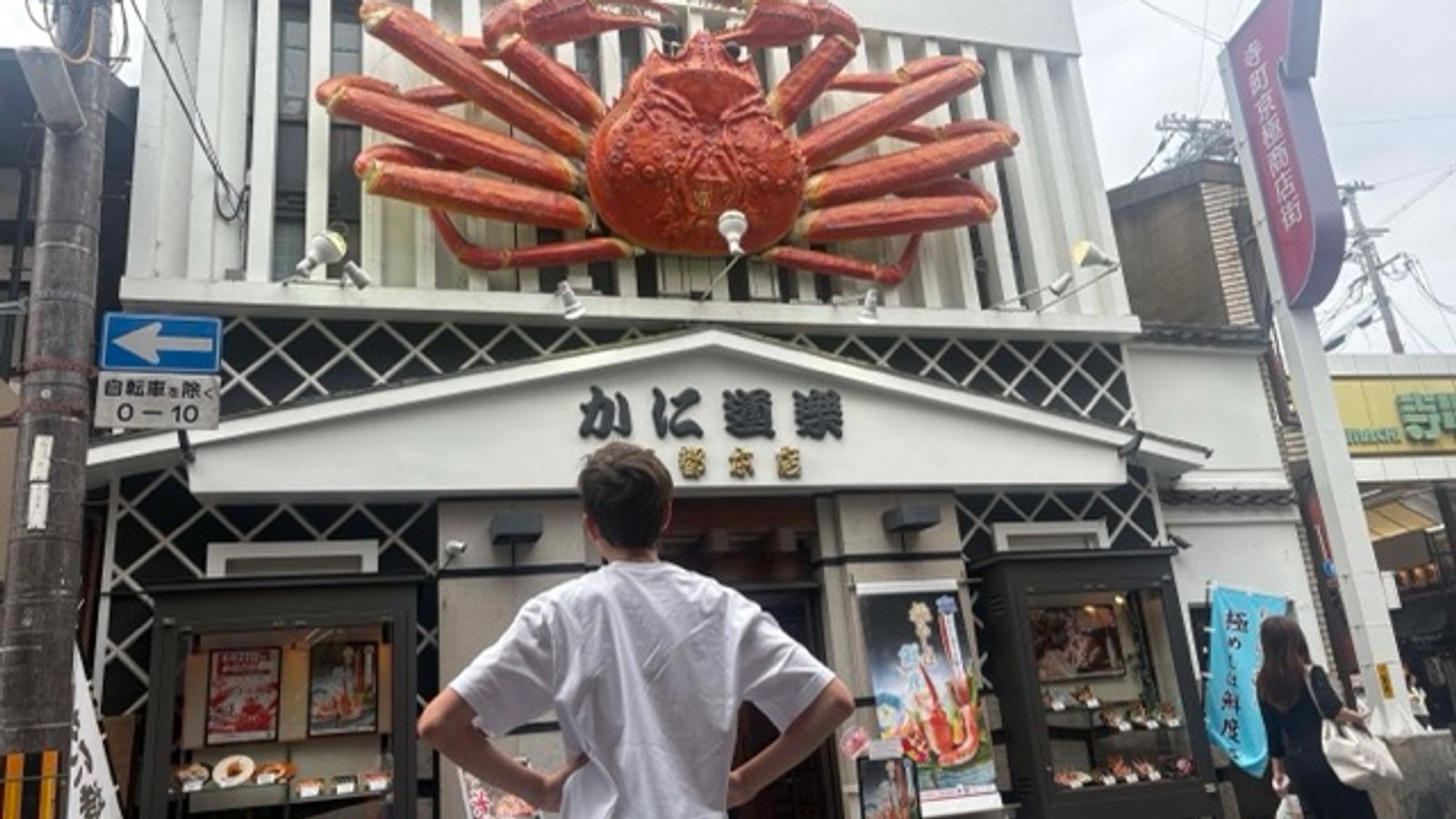
Every trip I take, even family vacations, is partly a research trip.
I can’t help but see the world through the eyes of a museum and experience designer. I’m always watching how places function, how cities operate, and whether they’ve managed to retain a genuine sense of identity.
I try to pay attention to the spaces between destinations as much as the destinations themselves. The coffee shops. The sidewalks. The transit stations. The storefronts. The ordinary places that quietly reveal how a city understands itself.
That’s the lens I brought to Tokyo.
Even there I expected to find the same forces that have transformed so many American and European cities.
The same chains.
The same franchises.
The same gradual migration of suburban retail into dense urban neighborhoods.
Instead, I found something else.
Tiny ramen shops. Family-run izakayas. Coffee bars with six seats. Sushi counters tucked into subway stations. Bakeries. Specialty shops. Restaurants devoted to one thing done exceptionally well.
Of course, there were chains. Starbucks was everywhere. So were suprisingly impressive 7-11 convenience stores. Shopping malls with luxury international brands. I even passed a Burger King advertising a one-pound burger.
But they never seemed to define the city.
That observation led me to a larger question.
What if we’ve misunderstood the relationship between scale and place?
The Assumption I Didn’t Know I Had
For more than a century, we’ve behaved as though growth inevitably produces sameness. That feeding millions of people requires chain restaurants. That successful cities naturally converge on the same stores, the same buildings, and the same commercial landscape.
Tokyo suggested another possibility.
Perhaps scale doesn’t have to live in the experience.
Perhaps it can live in the infrastructure.
Perhaps the systems that support a city can become enormous while the experience of the city remains deeply human, deeply local, and unmistakably itself.
That realization changed the way I think about cities, museums, and the work of experience design.
Notice how the ground floor is defined by national brands. This isn’t meant as a criticism of the architecture. It’s illustrating your point that the same commercial language now appears in many American cities.
Where Scale Lives
Growing up in the suburbs of Philadelphia, then living and working in Los Angeles and spending time in New York, I unconsciously absorbed the logic of twentieth-century America. Scale meant standardization. The assembly line wasn’t just a way to manufacture products. It became a way to organize the built world.
The result is familiar.
National retailers replace neighborhood merchants.
Chain restaurants replace local institutions.
Commercial corridors become interchangeable.
The infrastructure of suburbia quietly migrates into the city.
We solved for efficiency.
In the process, we flattened identity.
Tokyo, by contrast, is one of the largest metropolitan areas in the world. It feeds, transports, and serves tens of millions of people every day.
Its infrastructure is enormous.
Its experience remains intimate.
That, I think, is the difference.
Not whether the systems are large.
But where their scale is visible.
In much of America, scale is expressed through the customer experience. Bigger brands. Bigger stores. Bigger parking lots. Familiarity becomes the product.
In Tokyo, much of the scale disappears into the systems that support everyday life. Distribution networks. Transit. Utilities. Logistics. The infrastructure grows larger while the places people actually inhabit remain small, local, and distinctive.
The system scales.
The experience stays human.
Museum of the American Revolution, Philadelphia, PA
Museums as Acts of Placemaking
I spend my career designing museums. People often describe museums as places that create experiences.
I think that’s incomplete.
Museums are among the last civic institutions whose purpose is to make a place feel more like itself.
The Museum of the American Revolution belongs in Philadelphia because Philadelphia is where the story unfolded.
The La Brea Tar Pits belong in Los Angeles because they emerged from the geology beneath the city.
The Tenement Museum belongs in New York because its stories cannot be separated from the streets outside its front door.
Great museums don’t simply house collections.
They deepen our understanding of the places that produced them.
At their best, they resist the flattening of culture.
They remind us that place still matters.
My wife and 5 year old explore a convenience store. Not a mom & pop, but not a CVS.
The Cultural Equivalent of Fast Food
That feels increasingly important because so many other forces push in the opposite direction.
Walk through enough redeveloped neighborhoods in Los Angeles, Philadelphia, Nashville, Austin, or dozens of other American cities and a familiar pattern emerges. The same coffee chains. The same hotel brands. The same national retailers occupying the ground floor of new mixed-use buildings.
The buildings function.
The systems work.
But they tell you remarkably little about where you are.
I think of this as the cultural equivalent of fast food.
Reliable.
Scalable.
Convenient.
And strangely placeless.
Places That Could Only Exist Here
None of this is an argument that America should become Japan. The countries are profoundly different. Japan is also a far more culturally and ethnically homogeneous society than the United States, and that undoubtedly shapes aspects of its urban life.
But that isn’t really my point.
My point is that infrastructure and identity are not the same thing.
Large systems do not have to produce interchangeable places.
That may be the most important lesson Tokyo offered me.
As designers, architects, museum professionals, civic leaders, and anyone responsible for shaping the built environment, we often ask how to create memorable experiences.
I think there’s a better question.
How do we help places remain themselves?
How do we preserve texture instead of replacing it with templates?
How do we build infrastructure without flattening identity?
How do we make cities more efficient without making them less distinctive?
Those strike me as the defining placemaking questions of the twenty-first century.
The twentieth century gave us extraordinary systems.
The twenty-first should give us extraordinary places.
The places we remember are rarely the ones that could exist anywhere.
They are the places that could only exist here.